Fantasy Cricket Tips: Captain, Vice-Captain & Role-Balance Templates
Repeatable selection templates: captain and vice-captain method, role-balance rules, ownership splits and post-toss pivots.

The three-pass captain method
The captain pick is the single biggest decision in your team. The multiplier is 2x in the standard format, and a 70-point swing in either direction is the difference between a winning and a losing contest. Use a method — three passes through the candidate list, each pass narrowing the field — instead of going with the player you want to captain.
Pass 1: floor
For each candidate, write down the worst realistic score for the role and the conditions. A top-order batter on a used pitch in Mumbai in a T20 has a floor of about 25-35; a death-overs bowler on a flat track has a floor closer to 20. Floor is what the player will score if everything goes slightly wrong. A captain with a floor of 50 will not lose you a contest on a single bad day.
Pass 2: ceiling
Now write down the upside if everything goes right. A set top-order batter on a flat track in a T20 has a ceiling of about 100-130. A strike bowler on a helpful surface has a ceiling of about 90-110. A wrist-spin all-rounder on a turning track has a ceiling of about 80-100, with the bonus of being less picked. The captain with the highest ceiling wins you contests you should not have won. The captain with the smallest gap between floor and ceiling is the one you want in a head-to-head.
Pass 3: role certainty
Will the player bat through the innings? Will the bowler bowl at the death? The best captain is not the one with the highest ceiling — it is the one whose ceiling is reachable. A top-order batter is more certain to bat than a middle-order batter. A frontline seamer is more certain to bowl 4 overs than a part-time option. Multiply the ceiling by a role-certainty factor of 0.7 to 1.0 to get the realistic ceiling. The candidate with the highest realistic ceiling is your captain.
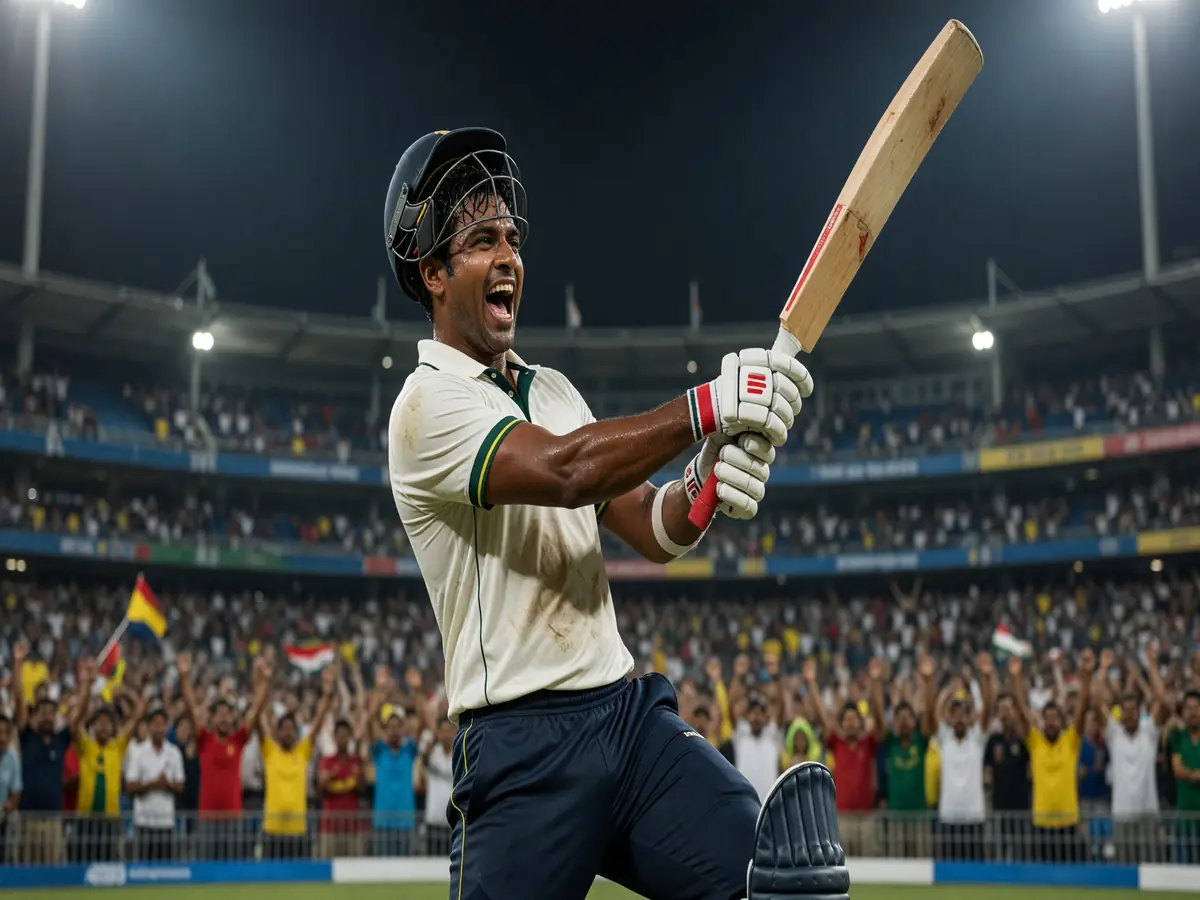
Role balance: the 4-1-1-5 starting shape
A common role-balance starting shape in a T20 is four batters, one wicketkeeper, one all-rounder and five bowlers. The trade-off: more batters gives you a higher batting ceiling but a lower bowling one; more bowlers gives you a higher bowling ceiling and a lower batting one. The shape you pick depends on the match and the contest.
- Bowling-heavy (5 bowlers): For a flat track where 180+ is on the cards. Captain a frontline bowler if you trust the conditions.
- Batting-heavy (5-6 batters): For a used track where 140-160 is the total. Captain a top-order batter.
- Balanced (4-1-1-5): The default when the pitch is a 50-50 read or you have not yet seen the toss.
- All-rounder pivot (3-1-2-5): When two all-rounders are in form and the credits line up. Captain one of them.
Ownership and the differential pick
Ownership is the percentage of teams in a contest that have selected a player. A captain with 60% ownership is the consensus pick; a captain with 15% ownership is a differential. In a head-to-head, ownership is irrelevant — you need the higher score, not the unique one. In a 100,000-entry GPP, ownership is decisive — a consensus captain ties you with the field.
The differential rule of thumb: pick a captain whose ownership is below 30% in any contest over 1,000 entries, and accept that you need both the captain to fire and the field's captain to fail. If you cannot defend that double condition with a sentence, the pick is too cute.

Post-toss pivots
The toss is the single biggest information event in the run-up to a contest. Three pivots cover most of what changes:
Pivot 1: dew and the second innings
If the captain of the team bowling first is a seam-bowling all-rounder, dew in the second innings makes the ball hard to grip. Consider swapping to a spinner captain or a top-order batter captain, depending on the rest of the team. If the team batting first is a strong chaser, the second-innings captaincy is more valuable; the team batting first's captaincy is more valuable on a slow, low track.
Pivot 2: pitch read
If the pitch reads drier than expected, the spinners move up the captaincy list. If the pitch is green and seaming, the seamers do. The credit cap usually does not let you do both — pick the role that will dominate the second innings.
Pivot 3: confirmed XI
A player in the playing XI who was not in your probable XI is worth a swap. A player who is in the XI but is not in your team because you wrote them off is the most expensive miss. Always confirm the XI from the operator's push notification or the broadcaster's announcement, not from social media.
The 24-hour matchday routine
Here is the routine the editorial desk uses for an evening T20. Adjust the times for your fixture.
- 24 hours out: Read the venue report and the squad announcement. Write down the conditions and the players to watch.
- 12 hours out: Read the weather forecast and the operator's DLS policy. Note the cut-off time for refunds.
- 4 hours out: Build a candidate list for captain and vice-captain, using the three-pass method. Pick two alternatives in case of an XI change.
- 90 minutes out: Confirm the toss. Lock the captain and vice-captain, build the team, save the lineup.
- 15 minutes before deadline: Re-check the playing XI from the operator's push notification. Make any swap if the operator's policy allows.
- Deadline: Submit. Do not edit after this. Panic editing is the most expensive habit in fantasy.
Three pitfalls to avoid
- The favourite captain. You will lose contests where the favourite captain fails. That is the job. Pick the method, not the hero.
- The credit cap ignore. The 100-credit cap is the real constraint. If your team has 3 credits left, the team is wrong, not the credits.
- The late swap. Editing the team after the deadline is impossible. Editing it 10 minutes before the deadline out of panic is a different mistake. The captain should be locked 30 minutes before the deadline, not at the deadline.
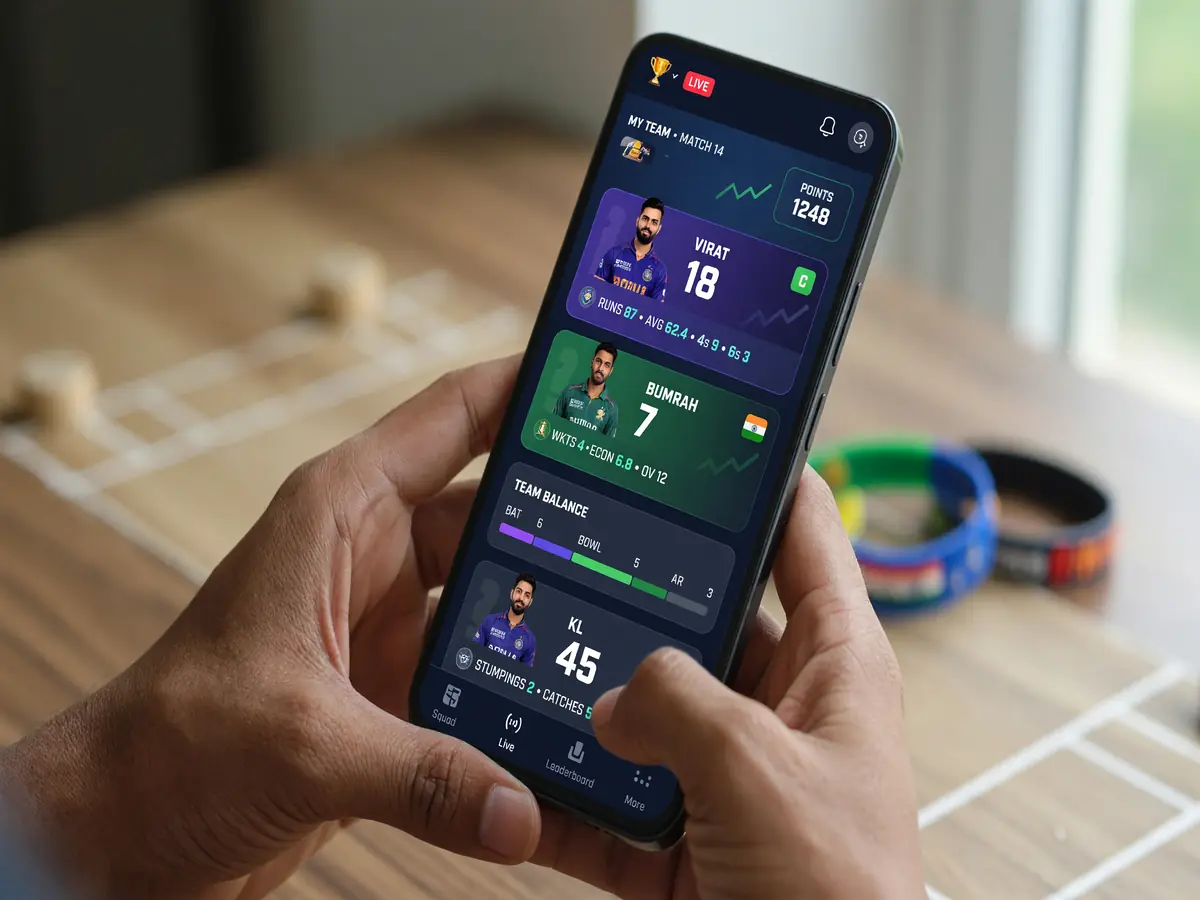
What to read next
The points system page is the reference for the exact scoring values. The role-balance template is a printable starting shape you can copy. The captaincy method article expands on the three-pass method with a worked example.
Editorial reminder
Tips are not predictions. A method helps you build a team that you can defend with a sentence after the toss. It does not tell you which team will win the match. If a tip requires the result to be a specific way, it is a bet, not a method.
Should I captain the most expensive player?
No. The credit value reflects expected performance, not captaincy suitability. A bowler at 10 credits is not always a better captain than a batter at 9 credits. The three-pass method works on floor, ceiling and role certainty, not on price.
Is ownership a reliable differential signal?
In large GPPs, yes. In small leagues, no. The cut-off depends on the contest size and the field's tendency to chase the popular pick. Use ownership as one input, not as the deciding factor.
When should I avoid a contest?
When the team is in a coin-flip state and you cannot defend the captain pick with a sentence. A contest you can defend is a contest worth entering. A contest you cannot is a contest worth skipping.